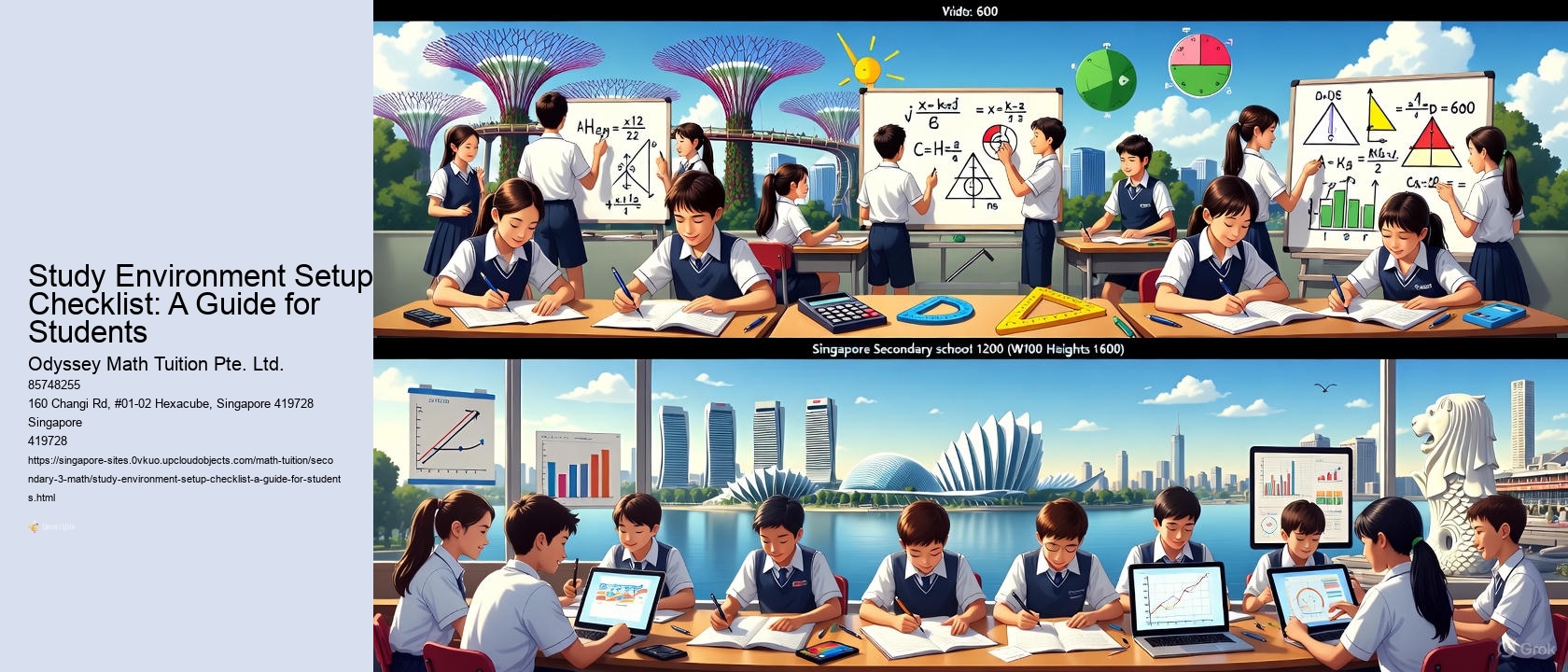
Introduction: The Power of a Purposeful Study Space
Ah, Secondary 3. That pivotal year where the academic pressure cooker really starts to simmer, leh? As Singaporean parents, we know this drill. We want our kids to not just pass, but excel, especially in the dreaded ahem... mathematics. It's not just about acing that 'A' level exam; it's about setting them up for a future where, let's face it, understanding algorithms is as crucial as knowing how to order kopi at the hawker centre. And with AI breathing down our necks (or rather, helping us order that kopi), a solid math foundation is the key to unlocking future opportunities. In today's fast-paced educational environment, many parents in Singapore are seeking effective strategies to improve their children's comprehension of mathematical ideas, from basic arithmetic to advanced problem-solving. Building a strong foundation early on can substantially elevate confidence and academic success, aiding students conquer school exams and real-world applications with ease. For those investigating options like secondary 3 math it's essential to prioritize on programs that stress personalized learning and experienced guidance. This strategy not only tackles individual weaknesses but also cultivates a love for the subject, resulting to long-term success in STEM-related fields and beyond.. That's why understanding how to excel in Singapore Secondary 3 math is so important!
But before your child dives headfirst into trigonometry and calculus, let's talk about something fundamental: their study space. Think of it as Mission Control for their academic endeavors. A cluttered, distracting environment is like trying to launch a rocket from a pasar malam – good luck with that!
Study Environment Setup Checklist: A Guide for Students
Creating a conducive study environment is paramount for academic success. It's more than just a desk; it's about cultivating a space that promotes focus, reduces distractions, and fosters a positive association with learning. Let's break down the essential elements:
1. Declutter and Organize: The Marie Kondo Method for Math
Think of your child's study area as their personal command center. A messy desk equals a messy mind. Encourage them to declutter ruthlessly. Old notes? Toss 'em (responsibly, of course!). Unnecessary stationery? Find a home for it. The goal is a clean, organized space that minimizes visual distractions.
Actionable Tip: Invest in storage solutions like desk organizers, shelves, or even a simple drawer divider. Label everything! This helps maintain order and makes it easier to find what they need, when they need it.
In the rigorous world of Singapore's education system, parents are ever more intent on arming their children with the skills essential to excel in challenging math programs, covering PSLE, O-Level, and A-Level preparations. Spotting early indicators of difficulty in topics like algebra, geometry, or calculus can bring a world of difference in developing resilience and proficiency over advanced problem-solving. Exploring dependable math tuition Singapore options can deliver tailored support that aligns with the national syllabus, making sure students acquire the boost they require for top exam results. By prioritizing dynamic sessions and steady practice, families can assist their kids not only achieve but exceed academic standards, opening the way for prospective chances in competitive fields..
Fun Fact: Did you know that studies show a direct correlation between a tidy workspace and increased productivity? In the city-state's demanding education structure, parents play a crucial function in directing their kids through significant evaluations that form educational futures, from the Primary School Leaving Examination (PSLE) which tests foundational competencies in areas like mathematics and scientific studies, to the GCE O-Level exams focusing on intermediate mastery in varied disciplines. As pupils move forward, the GCE A-Level tests necessitate advanced critical abilities and discipline command, frequently deciding higher education entries and professional trajectories. To keep knowledgeable on all aspects of these local evaluations, parents should explore official information on Singapore test papers provided by the Singapore Examinations and Assessment Board (SEAB). This ensures entry to the latest syllabi, test timetables, enrollment specifics, and standards that match with Ministry of Education standards. Regularly consulting SEAB can help parents plan effectively, lessen ambiguities, and bolster their kids in achieving peak performance during the competitive scene.. A clean environment reduces stress and allows for better concentration.
2. Lighting is Key: Shedding Light on Success
Good lighting is crucial for reducing eye strain and promoting alertness. Natural light is ideal, but a good desk lamp is a must, especially for those late-night study sessions.
Actionable Tip: Position the desk lamp to minimize glare on the computer screen or textbooks. Consider using a lamp with adjustable brightness settings to suit different times of day.
Interesting Fact: The human brain processes visual information much faster in bright, well-lit environments. Proper lighting can improve focus and reduce fatigue, leading to better learning outcomes.
3. Ergonomics Matter: Preventing the Hunchback of Nanyang Technological University
Hours spent hunched over a desk can wreak havoc on your child's posture. Invest in an ergonomic chair that provides good back support. The desk should be at a height that allows them to sit with their feet flat on the floor and their elbows at a 90-degree angle.
Actionable Tip: Encourage your child to take regular breaks to stretch and move around. Set a timer for every 30-45 minutes to remind them to get up and walk around.
History: Ergonomics, the science of designing workspaces to fit the human body, has its roots in military applications during World War II. Today, it's recognized as essential for preventing injuries and promoting well-being in various settings, including study environments.
4. Minimize Distractions: The Fortress of Focus
This is perhaps the most challenging aspect, especially in our digitally connected world. Identify potential distractions and take steps to eliminate them.
Actionable Tips:
Phone-Free Zone: Designate the study area as a phone-free zone. Encourage your child to put their phone on silent and keep it out of sight.
Website Blockers: Consider using website blockers to limit access to social media and other distracting websites during study hours.
Communicate Boundaries: Let other family members know that your child needs uninterrupted time to study.
Noise-Cancelling Headphones: A good pair of noise-cancelling headphones can be a lifesaver, especially in a noisy household.
Relatable Fact: The average teenager checks their phone every few minutes. Breaking this habit is crucial for improving concentration and academic performance.
5. Personalize the Space: Making it Their Own
While minimizing distractions is important, the study space should also be a place where your child feels comfortable and motivated.
Actionable Tip: Allow them to personalize the space with things that inspire them, such as motivational quotes, photos, or plants. Just make sure these personal touches don't become distractions themselves!
Interesting Fact: Studies have shown that students who personalize their learning environments tend to be more engaged and motivated. A personalized space can foster a sense of ownership and pride, leading to improved academic performance.
Creating a Conducive Study Environment
A conducive study environment is more than just a physical space; it's a mental sanctuary. It's a place where your child can focus, learn, and grow without unnecessary distractions. By implementing these tips, you can help your child create a study space that supports their academic goals and sets them on the path to success in Secondary 3 math and beyond. Remember, jia you!
What is the most important thing to consider when setting up a study environment for my Secondary 3 child?
Minimizing distractions is key. A quiet, dedicated space free from interruptions will help your child focus and concentrate on their studies.
How can I help my child organize their study space effectively?
Encourage them to declutter regularly and use organizers like shelves, drawers, and labeled containers to keep materials tidy and easily accessible. A well-organized space promotes a clear and focused mind.
What kind of lighting is best for a study environment?
Natural light is ideal, but if thats not possible, use a combination of ambient and task lighting. A desk lamp with adjustable brightness can help reduce eye strain during long study sessions.
Should my child study with music?
It depends on the child. Some students find that instrumental music or white noise helps them concentrate, while others find any sound distracting. Experiment to see what works best for your child.
How important is ergonomics in a study space?
Very important. Ensure your child has a comfortable chair with good back support and that their desk is at the right height to prevent slouching. Proper ergonomics can prevent aches, pains, and fatigue, leading to better focus.
My child studies on their bed. Is this okay?
Its generally not recommended. Studying in bed can create a negative association between the bed and wakefulness, making it harder to fall asleep later. A dedicated study space promotes better focus and sleep habits.