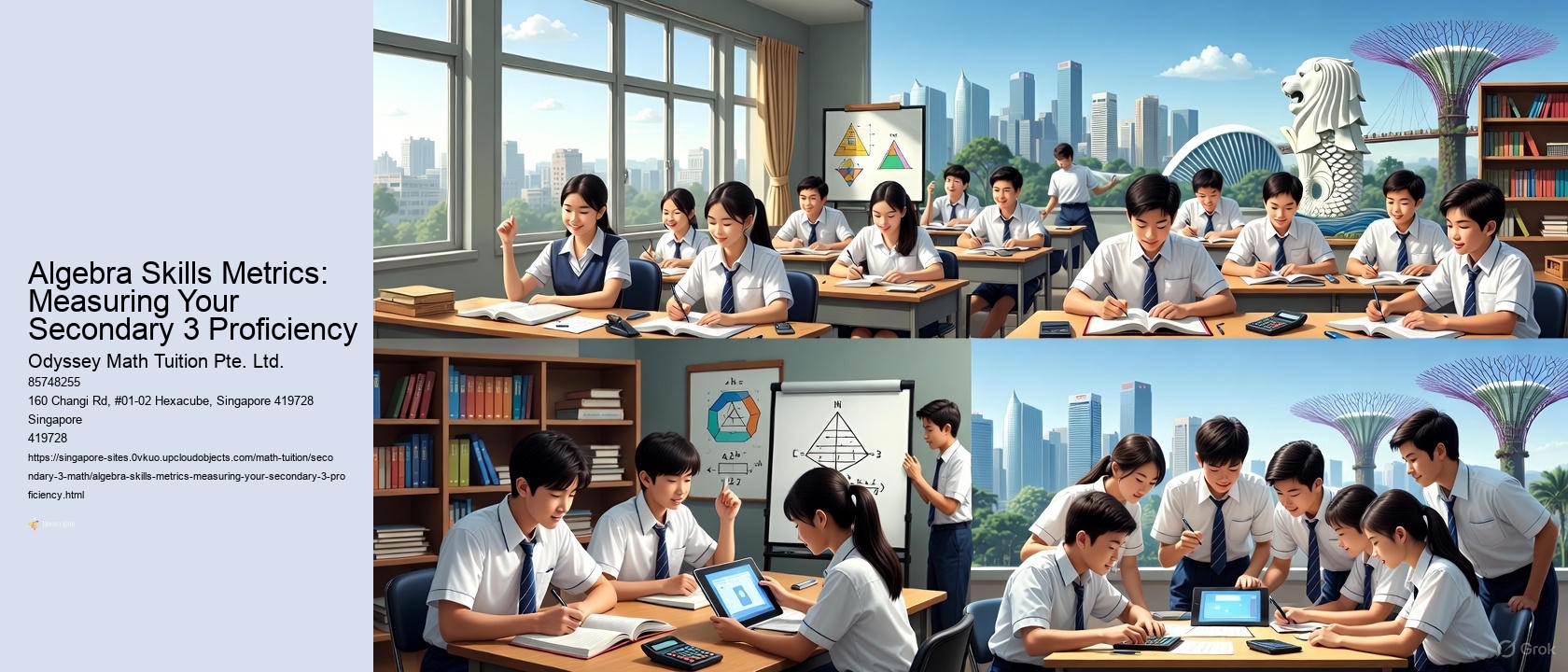
Alright, lah! Let's talk about Algebra. You know, in Singapore, Secondary 3 is like, the year. It's when everything starts to get real, right? And at the heart of it all? In Singapore's demanding education system, parents fulfill a vital part in leading their youngsters through key assessments that influence academic futures, from the Primary School Leaving Examination (PSLE) which tests foundational competencies in areas like mathematics and scientific studies, to the GCE O-Level exams focusing on secondary-level mastery in multiple subjects. In today's competitive educational landscape, many parents in Singapore are seeking effective ways to boost their children's understanding of mathematical ideas, from basic arithmetic to advanced problem-solving. Establishing a strong foundation early on can substantially elevate confidence and academic performance, helping students tackle school exams and real-world applications with ease. For those investigating options like secondary 3 math it's crucial to prioritize on programs that stress personalized learning and experienced guidance. This approach not only addresses individual weaknesses but also fosters a love for the subject, leading to long-term success in STEM-related fields and beyond.. As learners advance, the GCE A-Level tests require advanced critical capabilities and subject mastery, frequently influencing higher education entries and professional trajectories. To keep knowledgeable on all aspects of these national exams, parents should check out formal information on Singapore test papers provided by the Singapore Examinations and Assessment Board (SEAB). This secures availability to the newest curricula, assessment schedules, sign-up information, and instructions that align with Ministry of Education criteria. Frequently checking SEAB can aid households prepare efficiently, reduce uncertainties, and bolster their children in achieving top performance amid the challenging scene.. Algebra. Don't play play, ah! This isn't just some abstract math thingy; it's the foundation for everything that comes after.
Think about it: JC, poly, university… even your child's future career! Whether they want to be a doctor, engineer, programmer, or even a CEO, a solid grasp of algebra is crucial. With AI becoming so prevalent, understanding the logic and problem-solving skills that algebra cultivates is more important than ever. It's like giving your child the ultimate superpower in this digital age.
Algebra Skills Metrics: Measuring Your Secondary 3 Proficiency
So, how do you know if your child is on the right track? It's not just about getting a passing grade, it's about truly understanding the concepts. Here are some key areas to focus on:
Expressions and Equations: Can your child confidently simplify algebraic expressions, solve linear equations, and work with inequalities? These are bread-and-butter skills, essential for tackling more complex problems.
Quadratic Equations: This is where things get a little more interesting. Can your child factorize quadratic expressions, solve quadratic equations using different methods (factoring, completing the square, quadratic formula)? This is a crucial skill for upper secondary and beyond.
Graphs of Linear and Quadratic Functions: Can your child sketch graphs of linear and quadratic functions, identify key features like intercepts and turning points, and interpret the graphs in real-world contexts? Visualizing these concepts is key to truly understanding them.
Fun Fact: Did you know that algebra, as we know it, really took off in the 9th century with the work of Persian mathematician Muhammad al-Khwarizmi? His book, "The Compendious Book on Calculation by Completion and Balancing," laid the foundation for modern algebraic notation and problem-solving techniques. So, when your child is struggling with a particularly tough algebra problem, remind them that they're grappling with concepts that have been refined and developed over centuries!
Algebra Mastery for Secondary 3
Alright, so how do we ensure our kids are achieving algebra mastery? Here are some tips, especially for Singaporean parents looking to give their child that extra edge:
Focus on Understanding, Not Just Memorization: Rote learning might get them through a test, but it won't help them truly grasp the concepts. Encourage them to ask "why" and "how" instead of just memorizing formulas.
Practice, Practice, Practice: Math is like riding a bicycle – you need to practice to stay balanced. Encourage your child to work through plenty of practice problems, from textbooks, assessment books, and online resources.
Seek Help When Needed: Don't let your child struggle in silence. If they're having trouble, consider seeking help from a tutor, teacher, or online resources.
Subtopic: The Role of Tuition in Secondary 3 Math: In Singapore, tuition is practically a national pastime, right? But it's important to choose a tutor who focuses on building understanding, not just spoon-feeding answers. Look for someone who can explain concepts clearly, provide personalized support, and help your child develop problem-solving skills. A good tutor can be a game-changer, helping your child build confidence and excel in math.
Connect Algebra to Real-World Applications: Show your child how algebra is used in everyday life, from calculating discounts at the supermarket to designing buildings. In the challenging world of Singapore's education system, parents are ever more concentrated on arming their children with the skills required to thrive in rigorous math programs, encompassing PSLE, O-Level, and A-Level studies. Identifying early signs of struggle in subjects like algebra, geometry, or calculus can make a world of difference in building strength and proficiency over complex problem-solving. Exploring reliable math tuition Singapore options can offer tailored guidance that aligns with the national syllabus, guaranteeing students obtain the boost they require for top exam results. By focusing on interactive sessions and steady practice, families can support their kids not only achieve but surpass academic standards, paving the way for prospective possibilities in high-stakes fields.. This will make the subject more relevant and engaging.
Interesting Fact: Singapore consistently ranks highly in international math assessments like TIMSS and PISA. This is a testament to the hard work of our students, teachers, and parents. But it also means that the competition is fierce! To stand out from the crowd, your child needs to go beyond just meeting the minimum requirements.
How to Excel in Singapore Secondary 3 Math
So, how do we help our kids truly excel in Secondary 3 math? Here are some kiasu (afraid to lose) tips for Singaporean parents and students:
Start Early: Don't wait until the last minute to start preparing for exams. Begin reviewing concepts and practicing problems throughout the year.
Use Past Year Papers: Familiarize yourself with the exam format and types of questions by working through past year papers.
Develop a Study Plan: Create a realistic study plan that allocates sufficient time for each topic.
Stay Organized: Keep your notes, worksheets, and textbooks organized so you can easily find what you need.
Get Enough Sleep: A well-rested brain is a more effective brain. Make sure your child gets enough sleep, especially during exam periods.
History: Singapore's commitment to mathematics education has been a key factor in its economic success. From the early days of independence, the government has invested heavily in education, recognizing the importance of math and science skills for a knowledge-based economy. This long-term vision has paid off, as Singapore now boasts a highly skilled workforce and a thriving technology sector.
Remember, parents, your encouragement and support can make a huge difference in your child's success. Be there for them, celebrate their achievements, and help them overcome challenges. With hard work, dedication, and a little bit of kancheong (nervousness), your child can achieve their full potential in Secondary 3 math and beyond!
What are the key algebra skills my Secondary 3 child needs to master for exams in Singapore?
Key algebra skills include solving equations and inequalities, manipulating algebraic expressions, understanding functions and graphs, and applying algebraic concepts to word problems.
How can I tell if my child is struggling with algebra in Secondary 3?
Signs of struggle include difficulty completing homework, poor test scores on algebra-related topics, and an inability to explain algebraic concepts clearly.
What are some effective strategies to help my Secondary 3 child improve their algebra skills?
Strategies include regular practice, seeking help from teachers or tutors, using online resources, and breaking down complex problems into smaller, manageable steps.
Are there specific algebra topics that are more heavily weighted in the Secondary 3 syllabus in Singapore?
While the entire syllabus is important, topics like quadratic equations, simultaneous equations, and algebraic manipulation are often emphasized.
How can a tutor help my child improve their algebra proficiency in Secondary 3?
A tutor can provide personalized instruction, identify areas of weakness, offer targeted practice, and explain concepts in a way that resonates with your childs learning style.
What online resources are available to help my Secondary 3 child practice algebra?
Many websites and apps offer algebra tutorials, practice problems, and video explanations. Look for resources aligned with the Singaporean syllabus.
How important is algebra for future math subjects my child will take in Secondary 4 and beyond?
Algebra is a foundational skill for higher-level math subjects like trigonometry, calculus, and statistics. A strong algebra foundation is crucial for success.
What are some common mistakes students make in algebra, and how can my child avoid them?
Common mistakes include errors in sign manipulation, incorrect order of operations, and misunderstanding of algebraic properties. Encourage careful checking and attention to detail.
How can I create a supportive learning environment at home to help my child succeed in algebra?
Provide a quiet study space, encourage regular practice, offer praise for effort, and help your child find resources and support when needed.
Besides grades, what are some other indicators of my childs algebra proficiency?
Indicators include the ability to apply algebra to real-world problems, explain concepts clearly, and approach new problems with confidence.