Introduction: The Secondary 3 Challenge & The Need for Focus
Ah, Secondary 3. In this nation's challenging education structure, parents perform a crucial role in guiding their youngsters through key assessments that influence academic trajectories, from the Primary School Leaving Examination (PSLE) which tests foundational abilities in areas like mathematics and science, to the GCE O-Level tests concentrating on secondary-level mastery in diverse subjects. As students advance, the GCE A-Level tests demand more profound critical capabilities and discipline proficiency, frequently influencing tertiary placements and occupational paths. To stay well-informed on all facets of these local evaluations, parents should check out authorized materials on Singapore test papers provided by the Singapore Examinations and Assessment Board (SEAB). In today's demanding educational landscape, many parents in Singapore are looking into effective ways to improve their children's grasp of mathematical ideas, from basic arithmetic to advanced problem-solving. Establishing a strong foundation early on can significantly elevate confidence and academic success, helping students handle school exams and real-world applications with ease. For those considering options like secondary 3 math it's vital to prioritize on programs that highlight personalized learning and experienced guidance. This method not only tackles individual weaknesses but also nurtures a love for the subject, contributing to long-term success in STEM-related fields and beyond.. This ensures availability to the newest programs, examination schedules, enrollment specifics, and instructions that match with Ministry of Education requirements. Consistently checking SEAB can aid households plan efficiently, minimize uncertainties, and back their kids in reaching optimal outcomes in the midst of the competitive scene.. The year things get real, right? It's like going from riding a bicycle on a park connector to suddenly navigating the PIE during rush hour. Especially for subjects like Math – aiyo, the concepts become more abstract, the formulas longer, and the pressure? Don't play-play, it's on!
And let's be honest, in Singapore, doing well in Math isn't just about getting a good grade. It's about opening doors. Think about it – coding, engineering, finance, even AI development (which is super important now, leh!). All these future careers need a solid Math foundation. So, kiasu or not, we all want our kids to have that advantage, right?
But how to chiong for those As when distractions are everywhere? That's where creating the perfect study zone comes in. It's not just about having a desk; it's about crafting a space where focus can bloom and those tricky Math problems can actually kena solved.
Creating a Conducive Study Environment
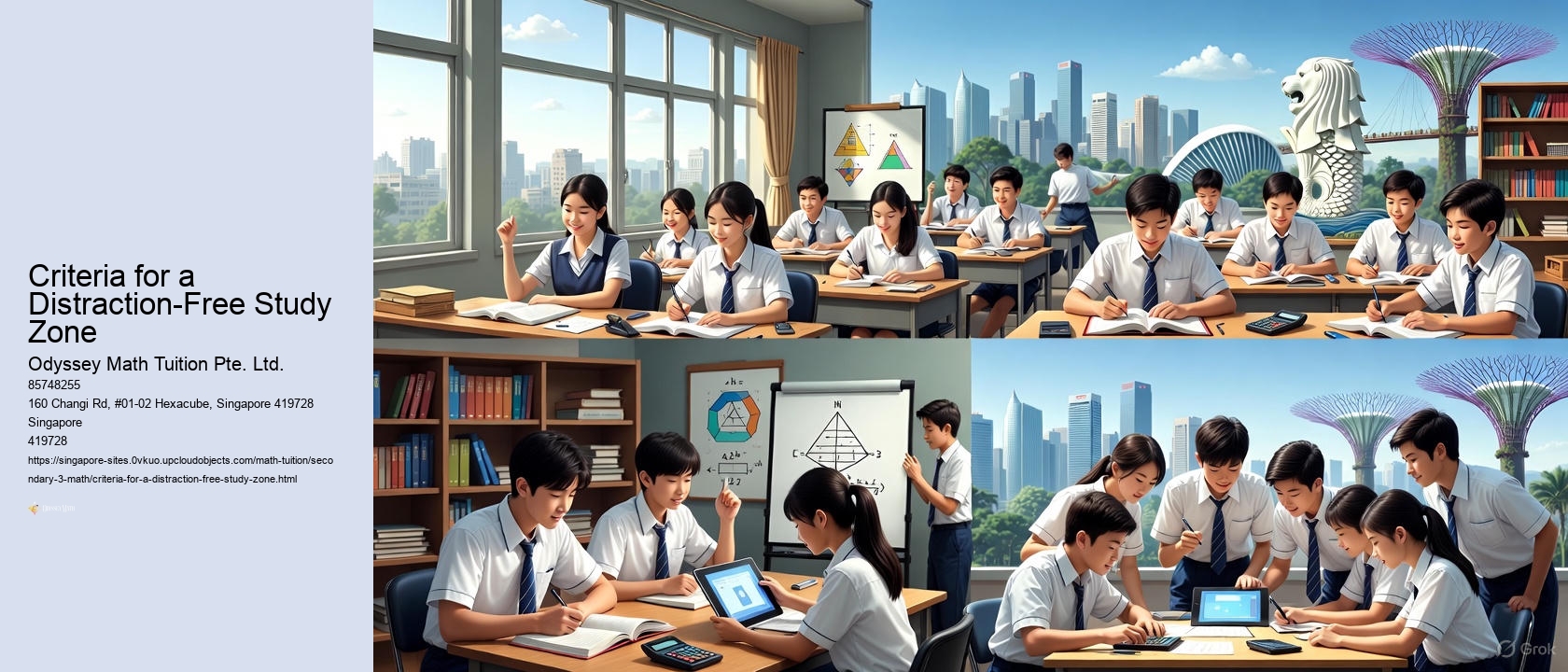
Okay, so what makes a study zone shiok enough to actually want to study in? Here's the lowdown:
Location, Location, Location: Find a spot that's relatively quiet. The living room during peak TV time? Confirm disaster. A spare room, a corner of the bedroom, even the dining table after dinner works. The key is minimal foot traffic and noise.
Declutter, Please!: A clean space equals a clear mind. Get rid of anything that isn't study-related. We're talking about old toys, magazines, that half-finished Lego set... bo pian, gotta go.
The Right Tools for the Job: Make sure your child has everything they need within easy reach: textbooks, notes, calculator, stationery. In the rigorous world of Singapore's education system, parents are ever more intent on preparing their children with the abilities essential to excel in challenging math syllabi, including PSLE, O-Level, and A-Level preparations. Identifying early signals of difficulty in topics like algebra, geometry, or calculus can bring a world of difference in building resilience and expertise over complex problem-solving. Exploring trustworthy math tuition Singapore options can offer customized support that aligns with the national syllabus, ensuring students obtain the boost they need for top exam performances. By focusing on engaging sessions and regular practice, families can assist their kids not only satisfy but surpass academic expectations, paving the way for prospective possibilities in demanding fields.. A well-stocked study zone is like a superhero's utility belt – always prepared!
Lighting is Key: Good lighting reduces eye strain and keeps you alert. Natural light is best, but a good desk lamp is a must. Avoid harsh, glaring lights that can cause headaches.
Comfort Matters (But Not Too Much!): A comfortable chair is essential for long study sessions. But avoid anything too plush or relaxing – we don't want them falling asleep!
Temperature Control: Singapore's weather is siao on, right? Make sure the room is well-ventilated and not too hot or too cold. A fan or air-conditioning can make a big difference.
Subtopic: Minimising Digital Distractions
Phone-Free Zone (Seriously!): This is the big one. Phones are the ultimate distraction. Encourage your child to put their phone on silent and keep it out of sight. Maybe even in another room. I know, it's painful, but it works.
Website Blockers: There are apps and browser extensions that can block distracting websites like social media and gaming sites. Consider using them during study time.
Designated "Tech Breaks": Allow for short, scheduled breaks to check social media or play games. This helps prevent the urge to constantly check their phone.
Family Agreement: Have a family discussion about the importance of minimizing distractions during study time. This helps everyone understand and support your child's efforts.
Fun Fact: Did you know that studies have shown that even the presence of a phone (even if it's turned off) can reduce cognitive performance? So jialat, right?
How to excel in Singapore Secondary 3 Math? It's not just about rote learning. It's about understanding the concepts and applying them to different problems. Consider these tips for Singapore parents and students:
Master the Basics: Make sure your child has a solid understanding of the fundamental concepts. This is crucial for tackling more complex problems.
Practice, Practice, Practice: Math is a skill that requires practice. Encourage your child to work through a variety of problems, including past year papers.
Seek Help When Needed: Don't be afraid to ask for help from teachers, tutors, or classmates. No shame, okay?
Understand the "Why," Not Just the "How": Encourage your child to understand the reasoning behind the formulas and concepts, not just memorize them.
Break Down Complex Problems: Teach your child to break down complex problems into smaller, more manageable steps.
Use Visual Aids: Diagrams, graphs, and other visual aids can help to understand abstract concepts.
Time Management: Teach your child to manage their time effectively during exams. Practice solving problems under timed conditions.
Interesting Fact: Singapore consistently ranks highly in international Math assessments like TIMSS (Trends in International Mathematics and Science Study). This shows the strength of our Math education system, but also the high expectations placed on our students.
By creating a distraction-free study zone and focusing on effective learning strategies, your child can conquer Secondary 3 Math and set themselves up for future success. Jiayou! You can do it!
How can I minimize digital distractions while studying, especially with a smartphone nearby?
Turn off notifications, use website blockers, or utilize apps designed to limit phone usage during study sessions. Consider placing your phone in another room to reduce temptation.
Whats the ideal noise level for a distraction-free study zone?
Generally, a quiet environment is best. If complete silence is distracting, try white noise, ambient sounds, or instrumental music at a low volume.
How important is comfortable seating for a productive study session?
Comfortable seating is crucial. Choose a chair that provides good back support and allows you to maintain good posture, preventing discomfort and fatigue.
How should I organize my study materials to minimize distractions?
Keep only the materials you need for the current task within reach. Organize everything else neatly out of sight to avoid visual clutter and mental distractions.
What role does lighting play in creating a conducive study environment?
Adequate lighting is essential. Natural light is ideal, but if unavailable, use a bright, adjustable lamp to reduce eye strain and keep you alert.
How can I politely ask family members to respect my study time and space?
Communicate your study schedule clearly and explain why a distraction-free environment is important for your academic success. Set boundaries respectfully.
Should I allow myself scheduled breaks during study sessions?
Yes, scheduled breaks are important. Short, regular breaks can help you stay focused and prevent burnout. Use breaks to stretch, walk around, or do something relaxing.
How can I eliminate visual distractions in my study area?
Keep your study space clean and organized. Remove unnecessary items, posters, or anything that might draw your attention away from your work.
What are some effective strategies for blocking out external noise?
Use noise-canceling headphones, earplugs, or create a physical barrier like a closed door or room divider to minimize external noise.
How can parents help their secondary 3 child create a distraction-free study zone?
By providing a dedicated space, setting clear expectations for quiet time, and minimizing interruptions during study sessions. Offer support and encouragement.